
Daily Post
Groovy Banana pays tribute to women with new single
Daily Post · Mar 13, 2026 · 4 min read
Daily Post
Groovy Banana is set to release a new reggae single “Wota Mama”, in collaboration with Brazilian Singer Marina Do Mar and Vanuatu’s Sheila Will, for International Women’s Day (IWD).
Groovy Banana is set to release a new reggae single “Wota Mama”, in collaboration with Brazilian Singer Marina Do Mar and Vanuatu’s Sheila Will, for International Women’s Day (IWD).
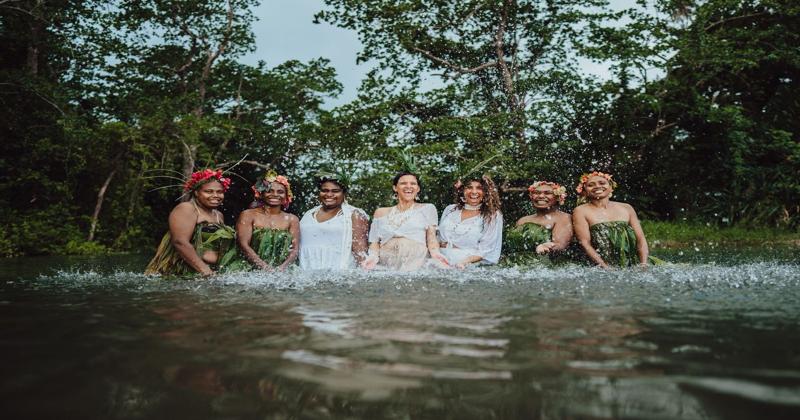
The song draws inspiration from the Water Mamas, a cultural group comprised of women who perform percussion on water.
“It is a tribute to mothers, sisters, and women in general. We hope it empowers them and encourages respect for Vanuatu culture,” said Gaelle Meheut, owner and musician at Groovy Banana.
“Wota Mama refers to the Water Mamas, but symbolically, women are like water—essential to life. ‘Mama’ represents mothers and women in general.
“…The lyrics and creative process, including collaborating with the Water Mamas, reflect those themes. It allows us to share an important message: women deserve respect, equal rights, and safety
The rhythm of the Water Mamas formed the foundation for the track, and the music video was filmed in collaboration with the group.
Gaelle Meheut and Benoit Heurtault who both are musicians at Groovy Banana, shared insights into their journey and creative process.
Their musical style reflects the Pacific environment.
“Our sound carries a Pacific influence, probably because of the ukulele. We’ve been inspired by string bands and the overall reggae vibe, which we blended with our French cultural background to create our Pacific-French pop sound,” Gaelle said.
She said being regularly faced by natural disasters has shaped their songwriting, with many songs addressing mental health, domestic violence, natural disasters, and addiction.
The collaboration with Marina Do Mar happened serendipitously. Sheila Wills was also a key contributor. She described working with the Water Mamas as heartwarming.
“We created headpieces from flowers and leaves, explained our concept, and the collaboration was natural. We filmed them performing, then each singer individually, then together. They taught us dance moves, which was fun. Afterwards, we relaxed and talked. It was a precious moment of sisterhood, resulting in joyful images and smiles,” she said.
Showcasing Ni-Vanuatu culture in modern music is important to the duo.
“It highlights the strength and beauty of Vanuatu culture. Even though we are not indigenous, we feel deeply drawn to it. Blending tradition with modern music keeps it alive and accessible to younger generations. We want Ni-Vanuatu people to feel proud, and international audiences to be curious. The response has been very positive, with views from countries including the United States, Spain, Australia, Brazil, France, and several African nations,” Gaelle said.
“The costumes made of leaves and headpieces from flowers highlight beauty and femininity. The performances show the power of women, and the dancing emphasises unity.
“Artists can promote gender equality and women’s empowerment. It is a human rights matter. As role models, sharing our views can influence attitudes and contribute to positive change.”
Gaga concluded with a message for the community: “Be respectful and kind, especially online. Take care of your mental and physical health.
“Engage in practices that nourish your soul, stay grounded, and raise children in a non-violent way. Women are strong, capable, and deserve the space to express their voices. Men should welcome them. We are all part of the same nation. Society can grow and evolve if we nurture it.”
The duo also spoke about the social impact of their music. Gaelle shared that personal experiences shaped much of their songwriting:
She revealed that she struggled with mental health issues and, at one point, acted violently toward her children despite her beliefs in non-violence.
Gaelle said these experiences shaped the messages in their music.
“Often, people who act violently are themselves facing mental health challenges. By healing ourselves mentally, we can create a more peaceful society,” she said.
She added that the lyrics for “Wota Mama” came naturally after quitting kava, coinciding with Cyclones Judy and Kevin, which she described as a rebirth moment for them.
“Writing about these issues is also a way to heal,” Gaga said.
“Domestic violence has affected us personally and through friends. Within a month, four friends confided they were in violent relationships, one nearly dying from abuse.
That inspired songs addressing domestic violence, hoping to encourage victims to stand up and for society to react. We also wrote songs after the earthquake to help people heal.”