
Daily Post
Vanuatu grassroots leader attracts international attention at Sydney IWD and Climate Action Week
Daily Post · 2026年3月14日 · 4 分钟阅读
Local News
In a landmark week for Pacific climate advocacy, First Nations Elder Mary Jack made history as the first independent grassroots women’s leader from Vanuatu to bring the direct voices of ni-Vanuatu women to Australian government, industry, and media.
In a landmark week for Pacific climate advocacy, First Nations Elder Mary Jack made history as the first independent grassroots women’s leader from Vanuatu to bring the direct voices of ni-Vanuatu women to Australian government, industry, and media.
Ms Jack’s visit centres on securing support for Mitingar, Vanuatu’s first national grassroots women’s representative body, founded to provide frontline women with independent, place-based representation to determine their own gender equity and climate resilience strategies.
Her tour commenced at a Women in Media International Women’s Day (IWD) event. Ms Jack’s mission resonated deeply with host Dominique Spanos and media powerhouses including Caroline Oates (Google/YouTube), Hannah Barnes (VA Media Network), Marina Go AM (SCA), and Clair Weaver (LiSTNR), demonstrating the growing global resonance of her frontline advocacy.
Ms Jack then took the stage at the Climate Action Week Sydney Ministerial Launch. Appearing alongside Ministers Chris Bowen and Penny Sharpe, and Sydney Lord Mayor Clover Moore, she participated in a high-level panel hosted by the Matt Kean, featuring international figures such as David Hochschild (California Energy Commission) and Megan Flynn (Pollination).
Advocating for the grassroots women of Vanuatu, Ms Jack told the room: “I am very grateful to be here bringing the independent voices of Vanuatu’s grassroots women so you hear us directly, unfiltered by intermediaries.”
Her sincere representation of frontline climate realities drew widespread applause. Moved by Ms Jack’s address, David Hochschild declared: “Mary Jack is the keynote speaker of this event.” Ms Jack subsequently engaged in productive discussions regarding Mitingar’s mission with ministers and panellists.
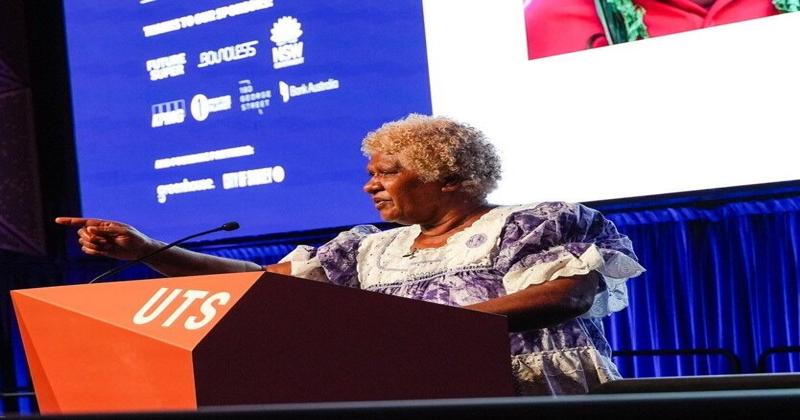
Ms Jack then addressed a Systems Transformation workshop at the University of Technology Sydney. She stated: “The life of the women is very hard. The gender and social pressures are increasing as climate impacts are escalating. Whilst the work of international NGOs is important, the most critical change must be built from the ground up by ni-Van women themselves. To develop their social leadership, own their journey and enable, for the first time, opportunities for true partnerships with INGOs so we can help many more women and communities, faster.”
Mitingar.org focuses on connecting and advocating on behalf of grassroots women across Vanuatu’s 65 inhabited islands to establish critical resource pathways.
A panel hosted by Wendy Harper (Agency of Women) followed, featuring Australian First Nations leaders Polly Cutmore and Bianca McNeair, and subject-matter experts Heidi Dumesich, Miia Burrow, and international environmental and pro bono lawyer, at a global law firm, Milly Thomas. Discussing systemic policy blind spots, Thomas shared insights on the Belem Gender Action Plan decided at COP30, its legal status and how it can be relevant to community and grassroots-led projects. The panel concluded there is no substitute for place-based capacity building, led by frontline women, when it comes to gender and climate justice.
Following a participatory co-design workshop led by Adjunct Professor Dr Leila Alem, she noted: “The insight that stayed with me most? Meaningful climate interventions don’t start with projects or policies. They start with listening — to women’s deeper drive to safeguard country, community and culture, and meeting them where they are. Women are not just beneficiaries of climate action. They are its architects. With their leadership and lived knowledge anchored at the centre, we are able to arrive at something far more durable than any externally-designed or imposed solution.”
The workshop’s outputs will feed directly into the Sydney Statement on Pacific-Led Climate Resilience, to be delivered to DFAT, Pacific High Commissions, and the UNFCCC Gender Secretariat by June 2026.